

In today’s digital age, a single false post, review, or statement can damage your personal reputation or devastate a business you built from the ground up. But when someone says or writes something harmful about you, does it legally qualify as defamation?
In Pennsylvania, defamation is defined as a false statement made to a third party that harms your reputation, exposes you to public hatred, or injures your trade or profession.
Before taking legal action, it helps to understand the distinction between the two primary types of defamation:
- Slander: Defamatory statements that are spoken
- Libel: Defamatory statements that are written or published
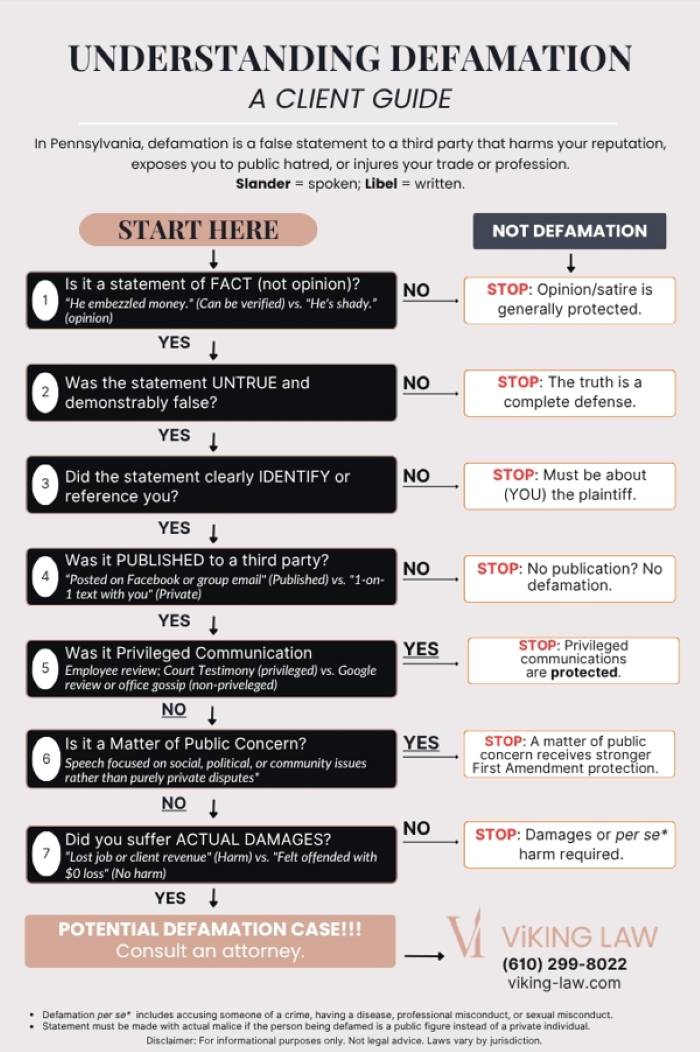
To help you evaluate whether a situation meets the legal threshold for a claim, use the decision flowchart below alongside our step-by-step breakdown.
Important Exceptions and Nuances
Defamation Per Se
In Pennsylvania, certain false statements are considered so naturally harmful that damage to your reputation is presumed by law without requiring proof of direct financial loss. This is known as defamation per se. Categories typically include false accusations of:
- Committing a crime
- Having a loathsome, contagious disease
- Professional misconduct or incompetence in your trade
- Serious sexual misconduct
Public Figures vs. Private Individuals
If the person being defamed is a public figure or official, the legal bar is significantly higher. Public figures must prove actual malice, meaning the person making the statement knew it was false or acted with reckless disregard for whether it was true or false.
Do You Have a Potential Defamation Case?
If you walked through the flowchart and answered YES to all seven steps, or if you believe you are facing a case of defamation per se, it is time to seek professional legal guidance.
Contact Viking Law today to schedule a free consultation and evaluate your legal options.
Disclaimer: For informational purposes only. Not legal advice. Laws vary by jurisdiction.